 David Emery Online
Black Country, New Road - 'Live at Bush Hall'
Black Country, New Road are a fascinating band. Up until last year, a music journalist would have probably focused on the dry wit of their lyrics and the wry delivery of lead singer Isaac Wood, both of which were the cornerstones of a sound that was taking them to bigger and bigger audiences. And then, on the eve of their second album release, he quit.
They were always more than just one person, though. And so, they have continued, reconfigured, and got on with it—continuing to tour, but with all new material. It’s still great—different, of course—but the spark that made them interesting in the first place is still very much intact.
‘Live at Bush Hall’ is a statement of intent—a full live performance film of brand new material, complete with a dose of theatre and artistic rigour. The vibe is Arcade Fire (without the problematic overtones) meets the best high-school band that ever was:
UPDATE: This has now been released as a proper live album, and it’s glorious: Black Country, New Road – Live at Bush Hall
Visit ➔
The Work by Gold Panda
Sometimes, and in fact often with my most favourite records, it takes quite a few listens for an album to reveal itself. Listen one will just bounce off in a wave of indifference, or disappointment if expectations are high. Another try will result in the same, often the second half doesn’t even get listened to. Then a week will go by. Maybe a track appears in shuffle and I’ll check to see what it is and be surprised. And so on. Until, eventually, my ears are accustomed enough to let the whole album in, and again and again until it dominates my listening.
So it goes, and so it has been with the latest album by Gold Panda.
I’ve been a fan for years, and in fact I would credit his 2013 album “Half of Where you live” as being my first introduction to electronic music, having focused on guitars for far too many years prior. “The Work” initially passed me by, despite wanting to love it. Now it’s a daily play.
Listen ➔In Memory Of Tweetbot
On January 12th, 2023, without warning, Elon Musk ordered his employees at Twitter to suspend access to 3rd party clients which instantly locked out hundreds of thousands of users from accessing Twitter from their favorite clients. We’ve invested over 10 years building Tweetbot for Twitter and it was shut down in a blink of an eye.
For a while I’ve been hearing people say how “bad” their Twitter experience has been recently. How many controversy-baiting tweets they’re being pushed, or how often they get content they just don’t want to see. This had always confused me, as it didn’t match at all with what I was seeing—I thought to myself that maybe they should just unfollow whoever was retweeting that content into their timelines.
Well, now I get it.
I’ve not used the official Twitter client in—checks notes—over a decade and, well, it turns out it’s not… great. Spot checking it just now, and out of my latest 15 posts, 7 of them are negative, click-batey noise that the algorithm is prioritising as the most “engaging” content. I’m also getting notifications about random accounts that I don’t follow having posted. Hugh Laurie’s dog has died. Thanks for letting me know, Twitter.
Tweetbot has been one of my top used apps for years, but also my refuge. Always focused on the user experience above all else, it is such a loss to see it come to an end in such an abrupt and unceremonious way.
The only silver lining to this dark cloud is that Ivory—Tapbot’s new Mastodon client—is brilliant. It already feels like home.
Visit ➔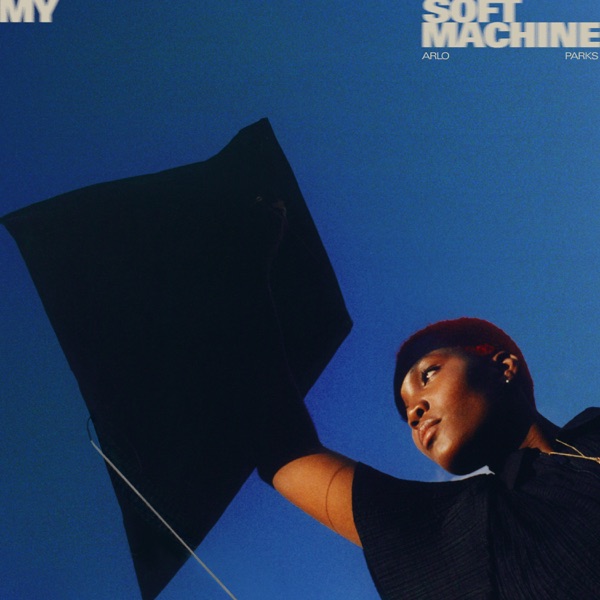
Weightless by Arlo Parks
Phoebe Bridgers has been busy.
I can only assume that three separate music marketing teams independently came to the conclusion that the third Wednesday in January was the optimal time to announce a new album, because yesterday was slammed with new music. A new record by The National. A new record by Arlo Parks. And a new record by boygenius.
You would, of course, expect Bridgers to appear on that last one, as it’s an in-air-quotes supergroup of her, Julien Baker and Lucy Dacus. All stalwarts of the American indie scene—and all great—and now all, such are the whims of the music industry, signed to Interscope, home of Lady Gaga and Sting.
She also appears on The National album, which makes sense, alongside Sufjan Stevans, which also makes sense, and Taylor Swift. Her appearance does, also, make sense—in fact it would have been almost surprising for her to have not been on it, such is where we’re at in The National Extended Universe in 2023—but if you told me that ten years ago I wouldn’t have even thought you were joking, just very confused. Phoebe is on the album twice though, so her work-rate still comes out on top.
Finally, Phoebe also makes an appearance on the new Arlo Parks album. The three separate labels did at least have the communication skills to avoid Bridgers appearing on multiple different songs on the same day, so we’ll have to wait until later to find out her contributions, but—and I stress that music is not a competition, we are all winners—the Arlo track is clearly the best, at least on first listen.
If you only have the chance to listen to one of these, make it that one. And then proceed, like I have just done, to wonder just how Phoebe Bridgers handles time management.
Listen ➔
Be On Your Way by Daughter
I must confess that Ex:Re, the solo record by Daughter’s singer and main songwriter Elena Tonra, is a once-a-week listen for me, despite it coming out over 4 years ago now. That also accounts for the 7 year gap since their last album proper.
It’s beautiful, of course.
Listen ➔What Can We Learn from Barnes & Noble's Surprising Turnaround?
Publishers give discounts and thousands of dollars in marketing support, but the store must buy a boatload of copies—even if the book sucks and demand is weak—and push them as aggressively as possible.
Publishers do this in order to force-feed a book on to the bestseller list, using the brute force of marketing money to drive sales. If you flog that bad boy ruthlessly enough, it might compensate for the inferiority of the book itself. Booksellers, for their part, sweep up the promo cash, and maybe even get a discount that allows them to under-price Amazon.
Everybody wins. Except maybe the reader.
Daunt refused to play this game. He wanted to put the best books in the window. He wanted to display the most exciting books by the front door. Even more amazing, he let the people working in the stores make these decisions.
—Ted Gioia
There’s a lot of interesting points in this piece, but the overriding theme for me is trust. Trust in the staff to make the right local decisions for their unique market and local conditions, and trust in the audience that they might want something different.
There’s also trust in the very concept of being a bookshop, and a focus on the answer to the question “why might someone go to a bookshop?” The answer, which seems obvious but clearly isn’t, is to buy books. Not to drink coffee, or to buy assorted trinkets, or to chase after a completely unrelated business line in the hope that it might magically bring more customers in.
Focus and trust.
Visit ➔Dowsing is a technology for intuition amplification
So my unfounded, imagined mechanism starts like this: thinking about water, and stepping into a location where there is increased water likelihood, one may become primed to look down, which is physically represented as a microscopic movement or twitch of the fingers. (Which could of course be a random twitch because that happens too.)
—Matt Webb
I am absolutely fascinated by the idea that pseudoscience ideas like dowsing could—due to the deep and strange and mysterious ways our bodies are cobbled together—actually work on some level.
See also: homeopathy. I don’t for a second think that sugar pills with a microscopic amount of something in them have any effect, but—sometimes they do. Which means that our brains and our bodies are conjuring up that response out of nowhere, because the taker believes that they do.
And maybe—to build on Matt’s point about amplifying our own bodies intuition and natural responses—paracetamol, aspirin et al often work in the same way; it’s not the active ingredients that make you feel better, it’s the action of taking it. See also: when I give one of my kids a plaster for the most minor of scrapes.
Visit ➔
NO THANK YOU by Little Simz
A few listens in, and this sounds like a worthy follow up to her Mercury Prize winning last album, ‘Sometimes I Might Be Introvert’.
Also a timely reminder not to collate your “Best of the Year” lists until the year is actually done.
Listen ➔
Active Scenes: Mix 001 (DJ Mix) by Confidence Man
Talking of DJ Mixes, this new mix by Confidence Man—whose song Holiday was The Guardian’s #19 best song of the year—is a blast.
Listen ➔