 David Emery Online
Did Last.fm Just Hand Over User Listening Data To the RIAA?
Did Last.fm Just Hand Over User Listening Data To the RIAA?
No:
Hi from Last.fm, I’m one of the founders (and the original founder of audioscrobbler, the music tracking plugin).
I’m not going to write much right now because i’m rather pissed off this article was published, except to say that this is utter nonsense and totally untrue.
As far as I can tell, the author of this article got a “tip” from one person and decided to make a story out of it. Techcrunch is full of shit, film at 11.
Don’t believe anything you read on TechCrunch.
Visit ➔Looks Like Facebook Just Took The Top Spot Among Social Media Sites
This past December we reported on how Facebook was coming up on Blogger to steal its top spot among social media sites when measured by total unique visitors worldwide… Now, it appears as though Facebook has finally done it.
Facebook being big is hardly news. No, what’s interesting about this is if you take a look at the graph you’ll see that Flickr is pretty much even-stevens with Geocities.
Yes: Geocities.
Visit ➔The Wrong Kind of Breathtaking
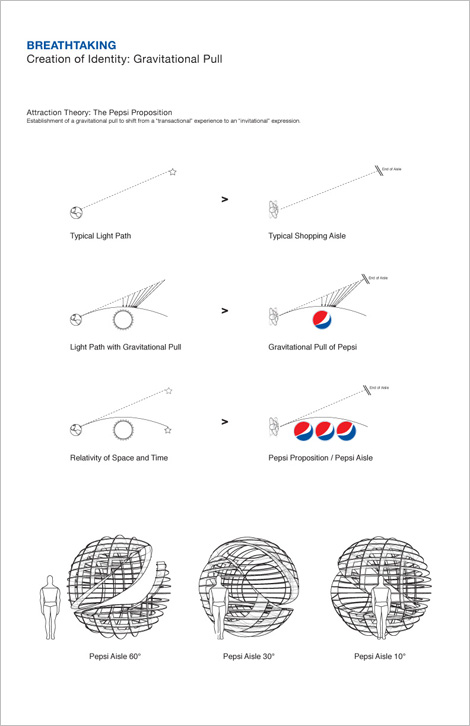
This is just brilliant. The utter bollocks that traditionally comes hand in hand with professional design and art school is the reason why I originally decided not to go down that route (instead opting for this whole computer/internet malarky). I just can’t stand it.
The gravitational pull of Pepsi
I kind-of hope this is actually either a wind up or some misjudged marketing stunt.
Visit ➔CSS Animation
WebKit now supports explicit animations in CSS. As a counterpart to transitions, animations provide a way to declare repeating animated effects, with keyframes, completely in CSS.
Yet more nice improvements in WebKit, although I think they’re butting right up against the boundaries of what should be in CSS and what should be in javascript (not that there are elegant ways of doing this natively in javascript anyway).
What’s most impressive is that this is already supported on the iPhone, and the performance is exceptional – the leaves demo (which will only work in a recently nightly or on an iPhone) runs as smoothly on the iPhone as it does on my MacBook, but my MacBook uses 50% of its CPU while doing it…
Visit ➔Tips for a transformed twitter
I am wrong to lament what Twitter once was and should embrace it as a tool I can use. Nevertheless like everybody, I need to be careful how I use it. I do not believe Twitter users will allow the tool to be reduced to a broadcast mechanism for pimping the latest blog post or special offer.
Good to see I’m not the only person thinking along these lines.
Visit ➔Artists, Bands and Musicians on Twitter
As a timely companion to my last post, here’s a Google Spreadsheet full of all the bands and labels that are on Twitter.
Visit ➔Despite iTunes Accord, Music Labels Still Fret
…Disagreements over the timing of the changes also resulted in a particularly tense conversation on Christmas Eve between Steven P. Jobs, the chairman and chief executive of Apple, and Rolf Schmidt-Holtz, the chairman of Sony Music.
A spokesman for Apple declined to comment, as did a representative for Sony Music. But chatter about Mr. Jobs’s combative tone on the call ricocheted around the music industry, and it was regarded as another display of his tough bargaining tactics, made possible by Apple’s position as the dominant seller of music.
When Steve Jobs finally leaves Apple – whether it’s soon or not for a while – I don’t see their being major changes in the kind of products they make or the way they do business. What they will lose, however, is Steve Jobs the negotiator. And from what I’ve heard from people that have dealt with him that will be quite some loss.
Visit ➔Sky Larkin on Dopplr
God darn it, why didn’t I think of putting a band on Dopplr? Considering we already generate iCals for most of our bands this should be a doddle…
Visit ➔